10 Best Courier Delivery Software in 2026, Tested and Compared
Courier delivery software has to make the working day easier to run. The useful systems connect package intake, route planning, driver updates, proof of delivery, customer exceptions, and closeout instead of leaving the dispatcher to rebuild the story from chats and spreadsheets.
This comparison covers ten platforms for small couriers, local delivery teams, last-mile operators, and larger fleets. Findings come from official product pages and pricing pages, independent review sources, public product workflows, and above-the-fold homepage captures checked on October 11, 2026.
Quick answer: - Best overall: Dispatchly, for small courier owners and dispatchers who want one shared view from package import through route closeout. - Best for route optimization: Routific for growing delivery teams, OptimoRoute for complex constraints, and WorkWave Route Manager for fleets with four or more vehicles. - Best for established last-mile operations: Onfleet for recipient visibility and integrations, Dispatch Science for enterprise extensibility, and OnTime 360 for order-to-cash workflows. - Best for small or local delivery: Shipday for a low-cost start, Track-POD for proof-first operations, and Tookan for task-based dispatch.
How we picked these tools
Every platform on this list supports real delivery work such as dispatch, route planning, driver coordination, tracking, or proof of delivery. I checked official product and pricing pages, then compared those claims with independent review pages from sources such as Capterra and Software Advice.
The ranking is an editorial fit ranking, not a mathematical score. Pricing is accurate as of October 11, 2026, but prices are subject to change. Dispatchly is ranked first because it is the client product and fits the small-fleet brief, with its early-access limitations stated plainly.
At a glance: a comparison
| Tool | Best for | Starting price |
|---|---|---|
| Dispatchly | Small courier owners who want one operational view | €99/month planned Starter offer |
| Onfleet | Established last-mile delivery teams | $619/month |
| Routific | Growing teams that prefer order-based pricing | Free; paid from $150/month |
| OnTime 360 | Courier order-to-cash workflows | $49/month |
| Dispatch Science | Enterprise dispatch and extensibility | From $675/month |
| Shipday | Small local delivery teams | Free; paid from $19/month |
| Track-POD | Offline proof of delivery | $59 per driver/month |
| Tookan | Task-based dispatch | $129/month; free tier listed |
| WorkWave Route Manager | Fleets with four or more vehicles | $54 per vehicle/month |
| OptimoRoute | Constraint-heavy route planning | $39 per driver/month |
1. Dispatchly
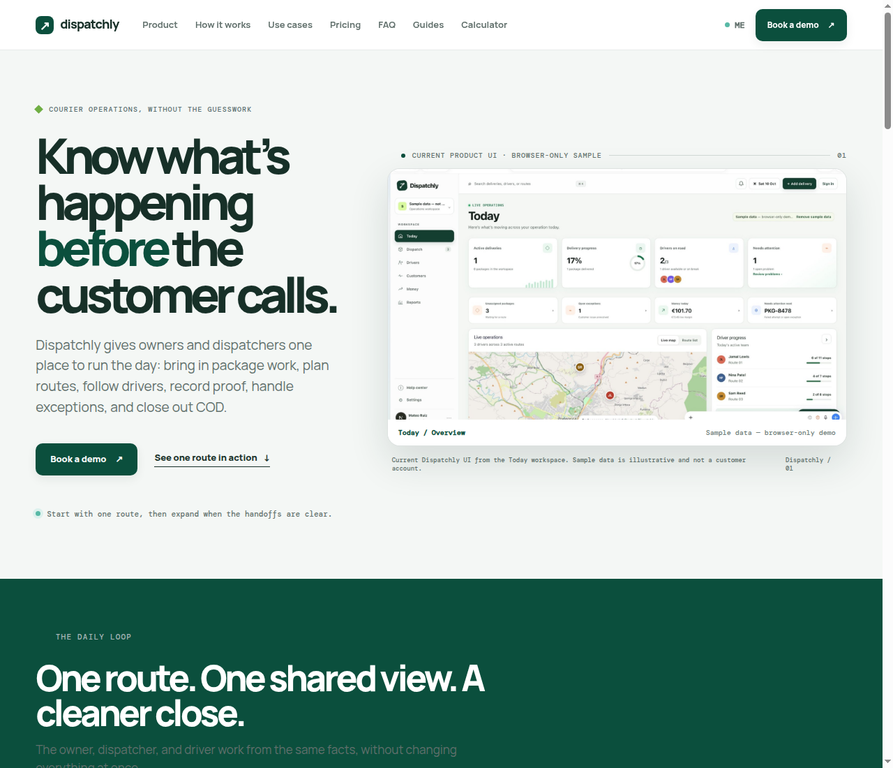
Dispatchly is early-access courier operations software for small courier owners and dispatchers. Its public workflow runs from CSV package import and multi-driver route planning through live driver status, proof of delivery, customer problems, COD tracking, and margin-per-delivery closeout.
The product is designed around a shared daily view. You can see the dispatch workflow, the route-first onboarding approach, and the planned pricing scope before asking the team to change the whole operation.
Key features: - Package and route control: Import or export package data, assign stops, plan routes for multiple drivers, and review capacity before departure. - Driver and delivery evidence: Follow live driver status, capture proof of delivery, and keep failed drops or customer exceptions visible. - Money and closeout: Review margin per delivery and COD tracking alongside the route rather than as a separate end-of-month exercise.
What other people thought about it:
No reputable independent review specifically about Dispatchly was verified during this research window. The available evidence comes from the official marketing site and public app, which means the product claims should be treated as early-access claims rather than independently validated outcomes.
Pros: - One shared workspace for the owner, dispatcher, and driver - Start with one route or driver and existing CSV data - Connects proof, exceptions, COD, and delivery margin
Cons: - €99/month is planned Starter pricing, not a final offer - The public app shows browser-only sample data until sign-in - The demo form and final launch privacy details are still being connected
Pricing: €99/month is the planned Starter offer, subject to confirmation before launch; there is no checkout and commercial scope still requires a demo conversation.
2. Onfleet
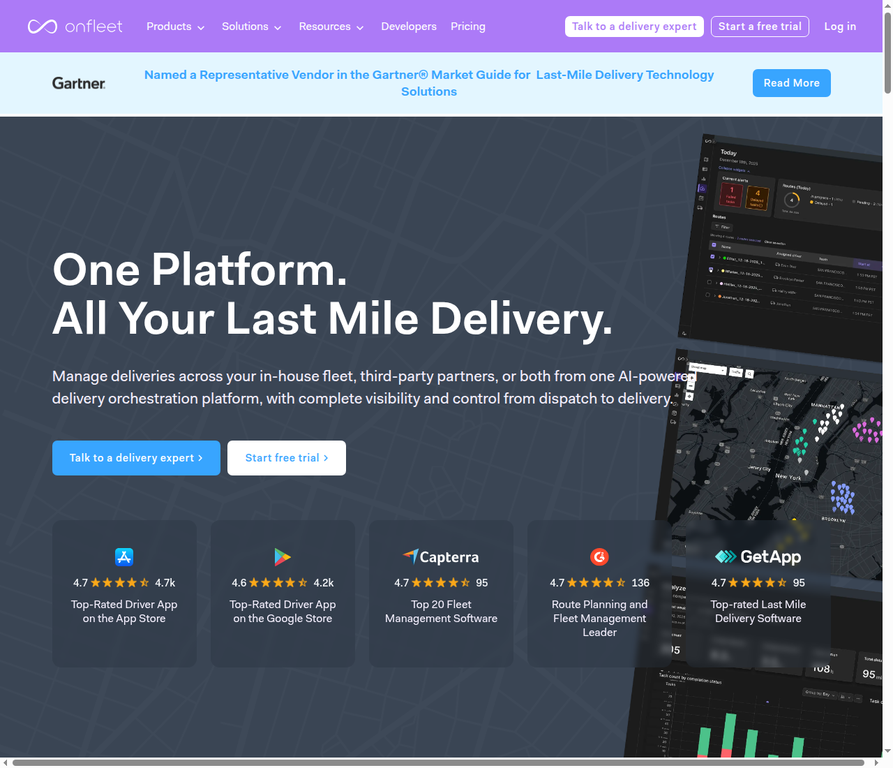
Onfleet is a cloud last-mile delivery platform for teams managing in-house drivers, delivery partners, or both. It combines dispatch, route planning, live visibility, recipient notifications, proof of delivery, and API access in a platform aimed at established operations.
Its pricing is based on delivery or pickup tasks rather than vehicles. That makes it easier to compare at a known task volume, but the entry price is substantial for a very small courier.
Key features: - Task-volume plans: The Launch plan bundles 2,500 delivery or pickup tasks with unlimited users. - Predictive ETAs: Status- and ETA-triggered notifications keep recipients updated as a delivery moves. - Delivery proof and verification: Photo and signature proof, barcode scanning, and optional ID or age verification support higher-control workflows.
What other people thought about it:
Capterra’s Onfleet review page shows 4.6/5 from 96 reviews, with praise for ease of use, adaptable integrations, API access, and time saved in delivery operations. The criticism is practical: reviewers report slowness when applying multiple filters, plus billing and account-control problems in one recent complaint.
Pros: - Strong recipient visibility and ETA communication - Broad API, webhook, and integration support - Mature proof-of-delivery and driver-visibility workflow
Cons: - Launch starts at a high monthly price - Task and optional communication charges need attention - Reviewers report occasional performance and billing frustrations
Pricing: Launch starts at $619/month for 2,500 tasks; Scale starts at $1,349/month and Enterprise starts at $3,099/month, before optional communication charges.
3. Routific
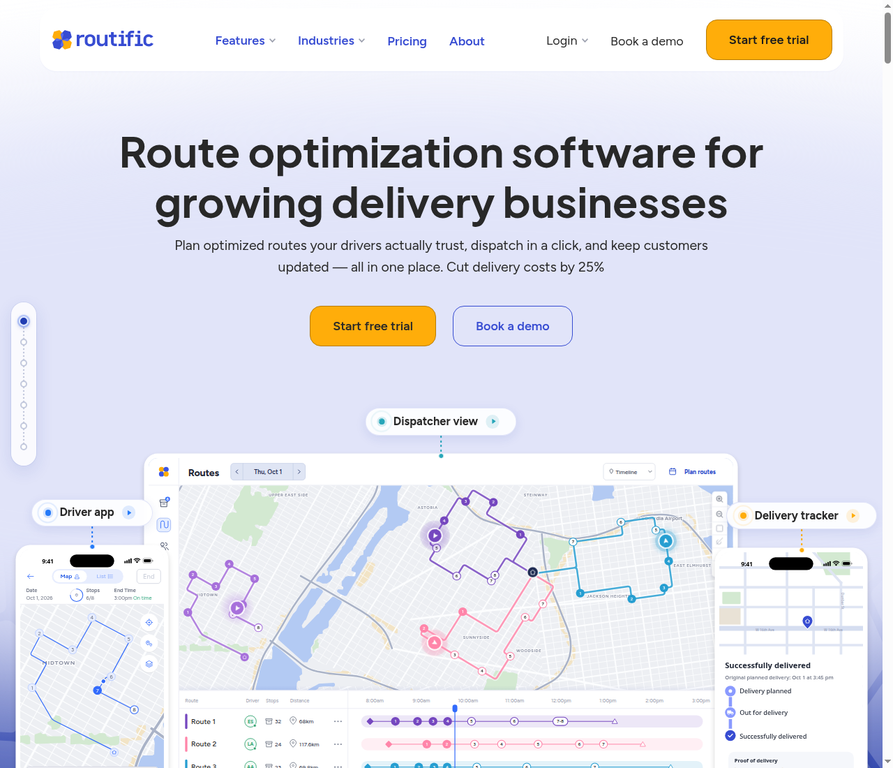
Routific is route-optimization and last-mile delivery software for growing teams that want traffic-aware planning, driver dispatch, customer updates, and proof of delivery. Its public structure is attractive to teams that prefer order-based pricing and unlimited drivers or dispatchers rather than a per-driver seat model.
The interface emphasizes route editing after optimization. That matters when a real dispatcher needs to move stops, add late orders, or adjust a route without starting over.
Key features: - Traffic-aware optimization: Build routes around traffic patterns, driver preferences, and business priorities. - Unlimited dispatch roles: Multiple depots and workspaces include unlimited drivers and dispatchers on the listed plans. - Customer delivery experience: Live GPS tracking, customer ETAs, notifications, and proof-of-delivery capture are part of the public product story.
What other people thought about it:
Capterra’s Routific reviews report 4.9/5 from 144 reviews, with praise for fast setup, route edits, customer notifications, imports, and responsive support. Reviewers also mention pin-mapping errors, SMS that may not arrive or look clearly branded, spreadsheet-formatting problems, mobile tracking limits, and less customization than larger platforms.
Pros: - Easy to learn and quick to adjust - Unlimited drivers and dispatchers on the listed plans - Strong route editing, tracking, ETAs, and POD coverage
Cons: - SMS is an add-on and may need branding checks - Address-pin and import issues appear in reviews - Advanced customization is more limited than enterprise tools
Pricing: Free for up to 100 orders; paid pricing starts at $150/month for 101 to 1,000 monthly scheduled orders, with volume charges above that.
4. OnTime 360
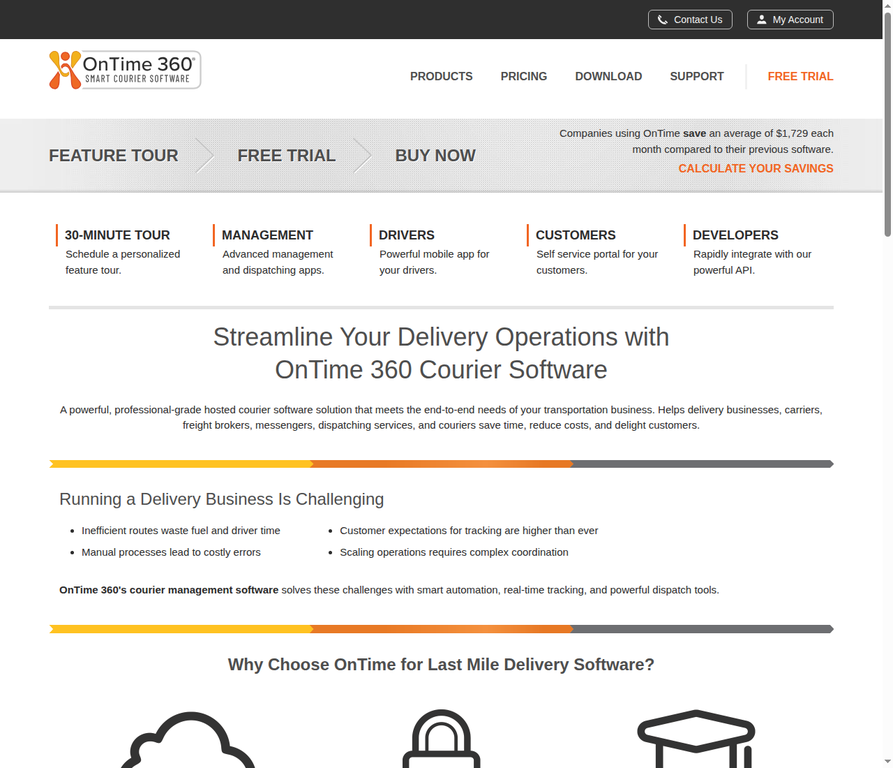
OnTime 360 is courier-management software built around order entry, dispatch, routing, driver tracking, proof of delivery, customer portals, and billing. It is one of the broader options here for businesses that want customer rates and invoicing connected to the delivery operation.
The pricing model combines a monthly plan with shipment allowances and overage charges. It is worth modelling expected volume before comparing it with flat-fee products.
Key features: - Configurable rate engine: Support dimensional-weight, zone, distance, customer-specific pricing, and extra charges. - Mobile delivery records: GPS, signatures, barcodes, photos, and offline support cover practical driver work. - Customer portal and billing: Higher tiers add portal features, invoices, online payments, and accounting or API options.
What other people thought about it:
Capterra’s OnTime 360 reviews praise dispatch, tracking, the customer portal, the driver app, QuickBooks transfer, and responsive support. The negative feedback is mixed but specific: reviewers report complex rate-table setup, multiple screens, slow syncing, limited mobile dispatch, and rigid follow-up workflows.
Pros: - Public entry pricing and no long-term contract stated - Covers dispatch, routing, POD, portals, and billing - Strong practical mobile features for courier work
Cons: - Shipment overages change the real monthly cost - Higher-tier features are needed for some portal and integration work - Rate setup can take time to configure correctly
Pricing: Core is $49/month for 100 shipments, then $0.35 per additional shipment; a $99 onboarding fee applies, with higher tiers at $99, $249, and $499/month.
5. Dispatch Science
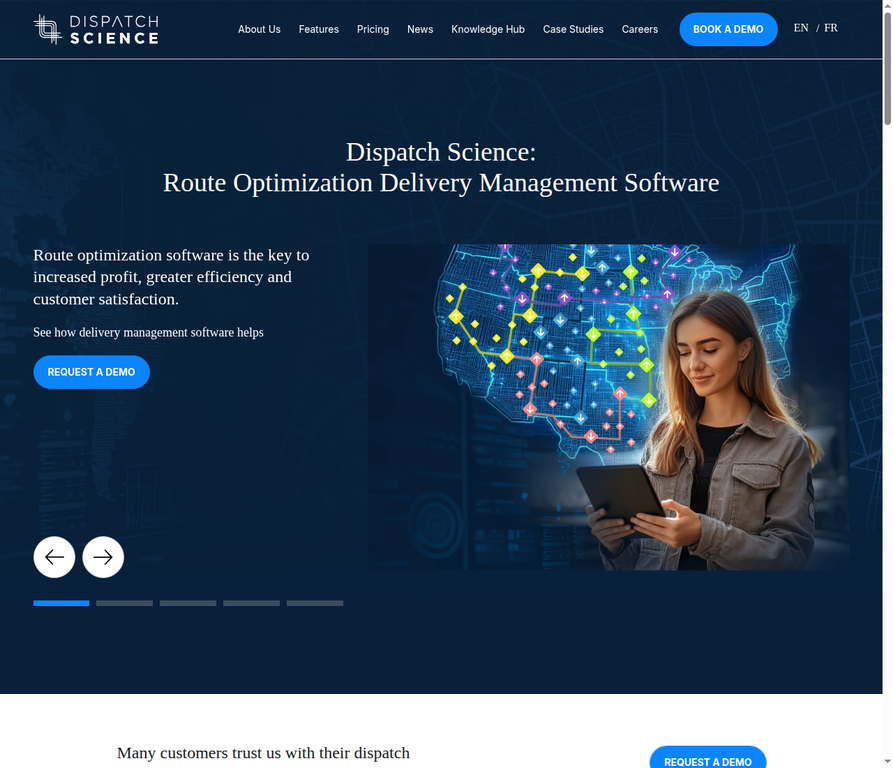
Dispatch Science is a transportation-management platform for delivery businesses that need dispatch, routing, tracking, billing, analytics, integrations, and extensibility. It is aimed at larger operations that want a broad system with room for custom workflows.
That breadth comes with a higher starting price and a more involved buying process. It makes more sense when dispatch and financial workflows need to sit in the same platform.
Key features: - Auto-dispatch and routing: Assign jobs and create optimized delivery routes with less manual dispatching. - Driver app and digital POD: Drivers receive work and capture signatures, photos, and payment-related delivery evidence. - Portals and extensibility: Customer portals, workflows, APIs, and an Enterprise developer toolkit support custom operations.
What other people thought about it:
Capterra’s Dispatch Science reviews show 4.9/5 from 9 reviews. Reviewers praise the breadth of order entry, dispatch, automated routing, invoicing, billing, driver tools, and API support; the criticisms include UI improvements and one reviewer’s report that the transition was long and painful.
Pros: - Broad delivery and transportation-management coverage - Automated assignment and route planning - Strong portal, workflow, API, and integration potential
Cons: - High starting price for a small courier - Pricing needs driver and option details to become a quote - Implementation may be a substantial project
Pricing: Starter starts at $675/month; Growth starts at $1,900/month and Enterprise starts at $4,900/month, with final pricing depending on drivers and options.
6. Shipday
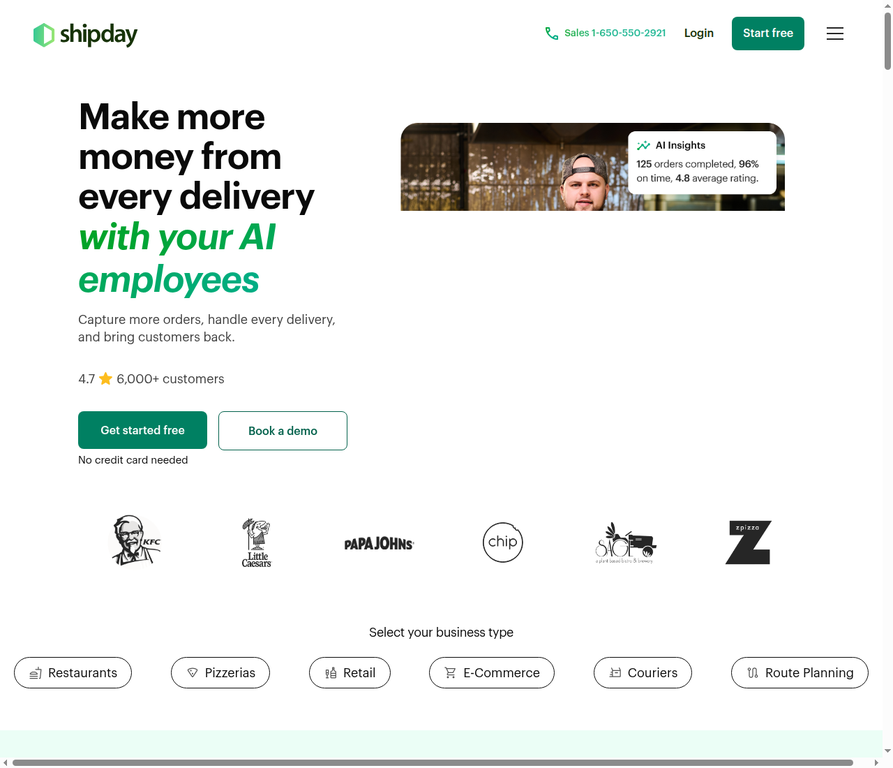
Shipday is local-delivery management software for restaurants, retailers, e-commerce businesses, and courier operators. It combines a dispatcher dashboard with a driver app, live tracking, customer updates, proof of delivery, and connections to third-party delivery providers.
Its free tier gives small teams a low-risk starting point. The trade-off is that order overages and integration work can change the total cost as the operation grows.
Key features: - Hybrid delivery dispatch: Dispatch to in-house drivers or connected third-party delivery services from one dashboard. - Driver app: Live GPS, route details, driver-dispatcher chat, and photo or signature proof support the delivery run. - Branded experience: Higher tiers add branded customer tracking and a branded driver app.
What other people thought about it:
Capterra’s Shipday reviews report 4.7/5 from 29 reviews. Praise covers delivery functions, routing, ordering-platform integration, and responsive support, while criticism includes support delays and a WordPress or WooCommerce setup that required Zapier and additional cost.
Pros: - Free Basic tier for up to 300 orders and 10 drivers - Supports owned and third-party delivery fleets - Useful live tracking, chat, and delivery proof
Cons: - Paid plans add per-order charges - Advanced routing and API access are not in Basic - Some integrations need workarounds or extra tools
Pricing: Basic is free for up to 300 orders and 10 drivers; paid plans start at $19/month, with higher tiers at $39, $99, and $349/month.
7. Track-POD
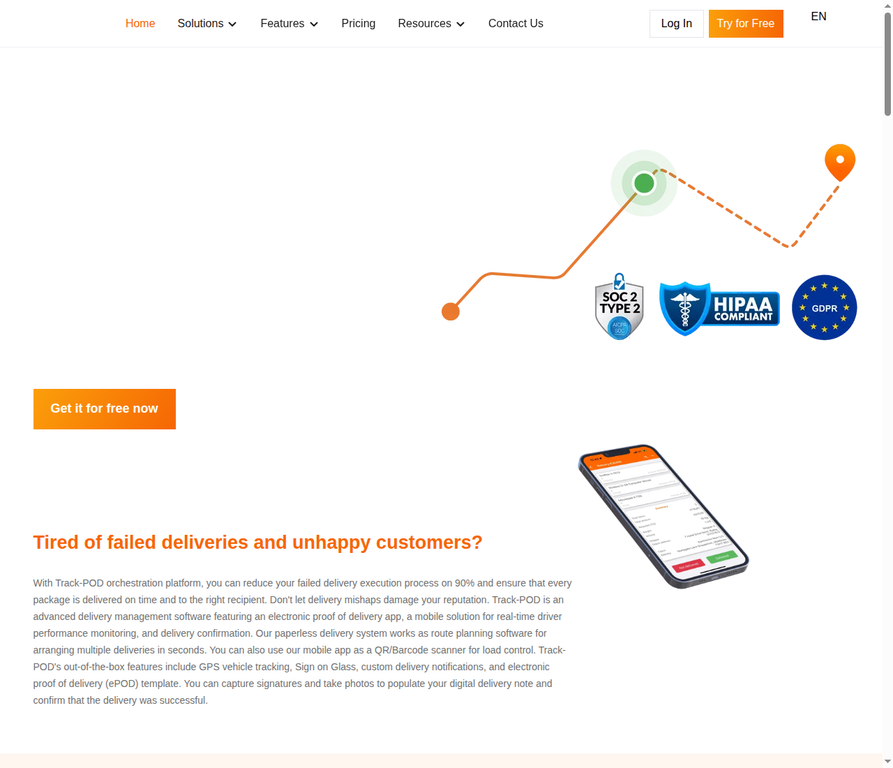
Track-POD is delivery-management software with a strong electronic proof-of-delivery focus. It combines scheduling, driver tracking, route planning, barcode control, offline mobile capture, customer notifications, and signed PDF delivery records.
It is a good fit when proof needs to be captured reliably in the field. Its per-driver pricing and three-driver minimum make it less attractive for a single-van operator.
Key features: - Offline ePOD: Capture signatures, photos, geotags, and timestamps, then synchronize when the connection returns. - Barcode and QR control: Scan packages during loading and delivery to reduce handoff mistakes. - Branded notifications: Share live tracking, dynamic ETAs, and signed PDF confirmation through email or SMS.
What other people thought about it:
Capterra’s Track-POD reviews report 4.7/5 from 140 reviews. Reviewers praise real-time updates, electronic POD, notifications, ease of use, and responsive support; criticism includes notification failures without clear alerts, limited customization, car-oriented mapping concerns, and mixed phone-support feedback.
Pros: - Strong offline proof-of-delivery workflow - Barcode, signature, photo, geotag, and timestamp capture - Helpful tracking and notification coverage
Cons: - Three-driver minimum on the published entry plan - Notification problems appear in reviews - Some workflows and maps are less customizable
Pricing: Advanced starts at $59 per driver or vehicle per month when billed monthly, with a three-driver minimum; higher tiers start at $79 and $99 per driver/month.
8. Tookan
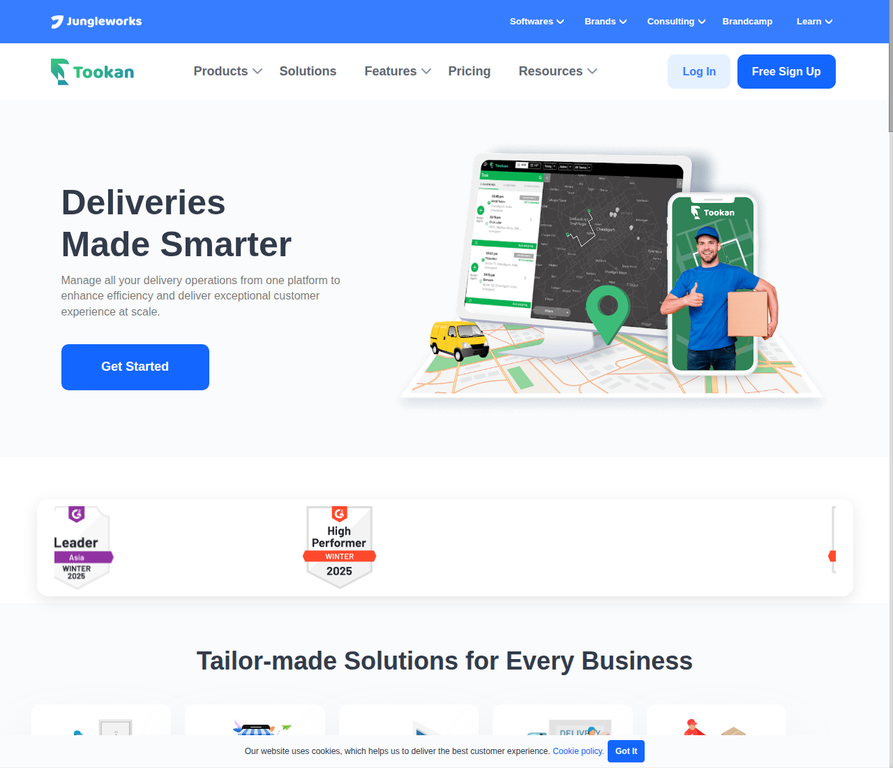
Tookan is task-based delivery-management software from Jungleworks for dispatching work, scheduling multi-stop routes, tracking agents, and sharing delivery status with customers. The current vendor product page positions it for food, grocery, logistics, pickup-and-delivery, and courier operations.
The requested tookanapp.com homepage returned 404 during this research, so the current Jungleworks Tookan product page was used for the screenshot and feature check. Public pricing is also inconsistent across vendor and review listings, so confirm the plan before buying.
Key features: - Task dispatch: Assign delivery work from one dashboard and monitor active tasks. - Customer portal: Let customers track delivery progress and receive updates. - Agent scheduling: Paid tiers list unlimited agents or drivers, with monthly task limits and overage billing.
What other people thought about it:
Capterra’s Tookan listing shows 4.1/5 from 77 reviews. Praise includes agent chat, on-time delivery reporting, booking, and scheduled multi-stop routes; criticism includes limited map display, battery and data use on agent phones, slow support, and one reported integration that did not work.
Pros: - Task-centric dispatch is easy to understand - Customer tracking and agent booking are included in the product story - Paid tiers list unlimited agents or drivers
Cons: - Requested official homepage returned 404 - Public pricing differs between sources - Reviews report map, support, battery, and integration issues
Pricing: The vendor lists a free tier with 100 tasks/month, then paid tiers from $129/month; Capterra’s public listing conflicts with some of those free-tier details.
9. WorkWave Route Manager
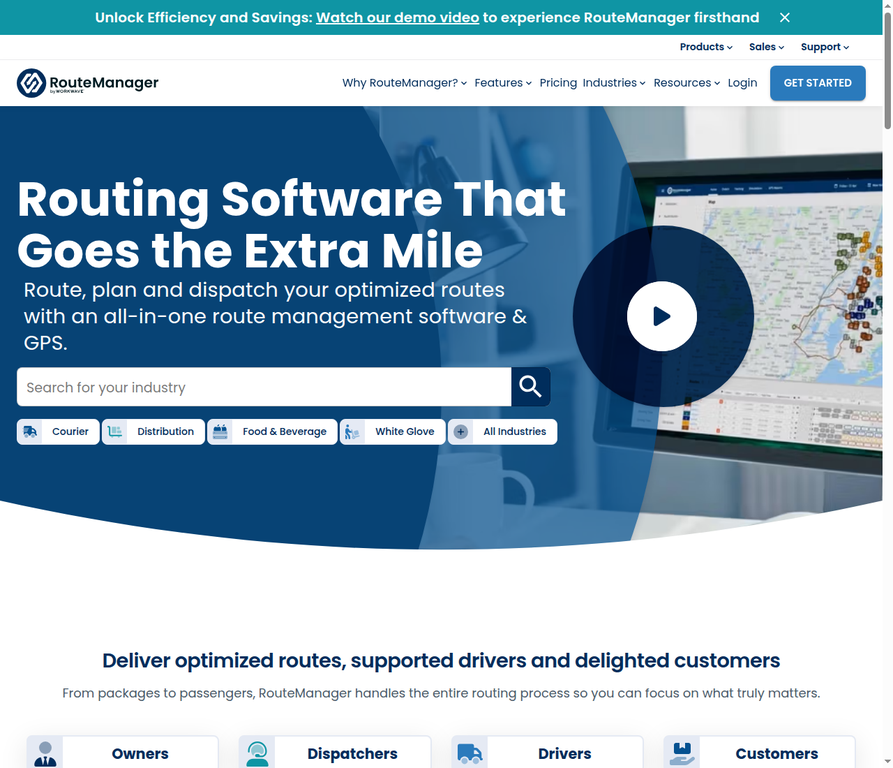
WorkWave Route Manager is route-planning and dispatch software for courier, distribution, food, field-service, and related fleets. It combines constraint-based optimization with a driver mobile app, GPS visibility, schedule changes, barcode scanning, and proof of job completion.
The four-vehicle minimum makes it a better fit for an established fleet than for a one-driver courier. It is useful when capacity, time windows, service time, and vehicle type all affect the route.
Key features: - Constraint-based planning: Account for capacity, service time, time windows, stop priority, and vehicle type. - Driver mobile app: Keep dispatchers and drivers connected as schedules change during the day. - Delivery records: Barcode scanning and proof-of-job-completion tools document the work.
What other people thought about it:
Capterra’s WorkWave Route Manager reviews show 4.3/5 from 82 reviews. Praise includes usability, useful features, and helpful support, while negative feedback includes a report of high cost, outdated solutions, and poor support, plus requests for easier product updates.
Pros: - Detailed planning for real fleet constraints - Driver and dispatcher schedule connection - Barcode and proof-of-completion support
Cons: - Four-vehicle minimum - No free trial or free version listed by Capterra - Review sentiment includes cost and support concerns
Pricing: Pricing starts at $54 per vehicle per month, with a four-vehicle minimum; monthly, quarterly, and annual options are available.
10. OptimoRoute
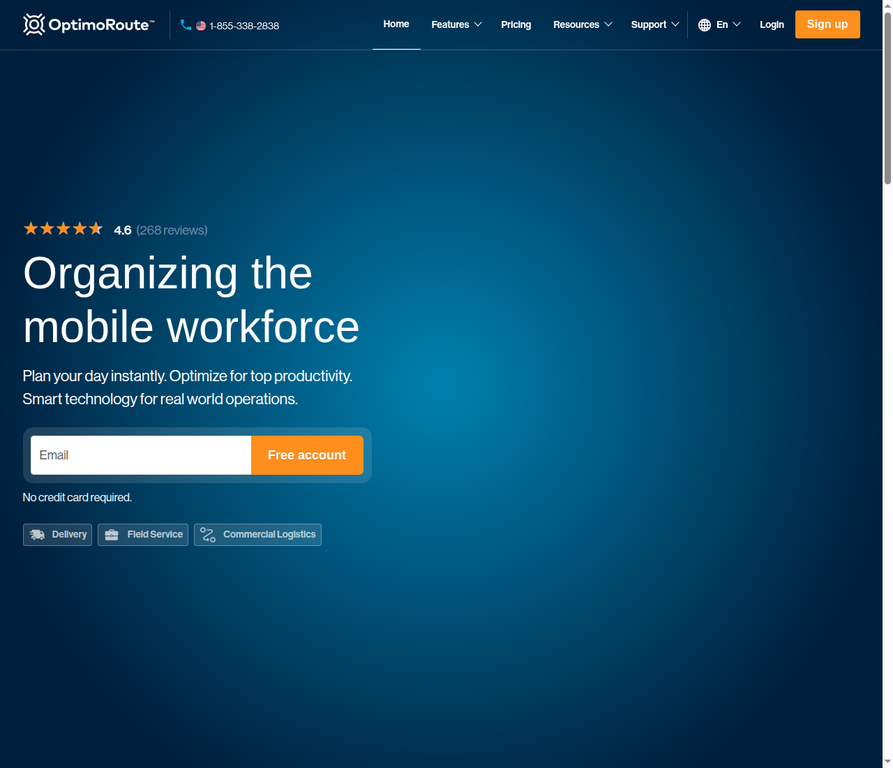
OptimoRoute is route and schedule optimization software for delivery, logistics, and field-service teams. It is strongest when planning must account for driver hours, delivery windows, vehicle capacity, skills, service times, customer updates, and proof of delivery.
Its per-driver pricing is clear enough to model, but the monthly bill rises as the team adds drivers. The product has more planning depth than a basic dispatch board.
Key features: - Constraint-aware planning: Build routes around work hours, time windows, capacity, vehicle characteristics, skills, and service time. - Live tracking and ETA: Follow driver progress and share delivery estimates with customers. - Mobile POD: Capture signatures, photos, notes, and barcode scans from the driver app.
What other people thought about it:
Capterra’s OptimoRoute reviews praise ease of use, route planning, customer service, live tracking, and accessible delivery photos. Reviewers also mention imperfect live updates, difficulty planning with all drivers in one scenario, and a need for better support for large apartment buildings.
Pros: - Handles detailed planning constraints - Strong live tracking and customer ETA tools - Useful mobile proof-of-delivery records
Cons: - Per-driver pricing grows with the fleet - Advanced functions require higher tiers - Reviewers report workflow and API limitations
Pricing: Current public comparisons list Lite from $39 per driver per month and Pro from $49 per driver per month; custom pricing is available for larger requirements.
Bottom line
The best courier delivery software depends on the shape of the operation. A small local courier may care most about a clear dispatcher view, route ownership, proof, and COD closeout, while a larger last-mile network may prioritize API access, predictive ETAs, or advanced automation.
Dispatchly is the most focused fit for a small courier owner who wants to start with one route and bring package, driver, proof, exception, COD, and margin facts into one place. It is still early access, and its €99/month Starter offer is planned rather than final.
Routific, OptimoRoute, and WorkWave are stronger starting points when route optimization is the main buying decision. Onfleet, Dispatch Science, and OnTime 360 make more sense when the operation needs mature delivery orchestration, portals, billing, or enterprise extensibility.
Shipday and Track-POD cover practical small-team needs at lower entry prices, while Tookan is worth considering only after confirming the current product URL, plan details, and support expectations. Compare the route workflow first, then compare the price that follows from your actual order, driver, and vehicle volume.
Frequently asked questions
What is the best courier delivery software overall in 2026?
Dispatchly is the best overall fit in this comparison for small courier owners who want one shared workflow from package intake through closeout. Onfleet and Routific are stronger alternatives for larger delivery visibility or route-optimization needs, but their pricing and operating model differ.
Is Dispatchly better than Onfleet?
They target different starting points. Dispatchly is designed for small fleets that want to begin with one route and discuss an early-access workflow, while Onfleet is a more mature, higher-priced platform for larger last-mile networks that need predictive ETAs, integrations, and recipient visibility.
Can courier delivery software handle proof of delivery and failed stops?
Yes. Most platforms in this comparison list photo, signature, barcode, timestamp, or mobile proof features, and several support customer notifications or exception workflows. Confirm the exact driver steps, offline behavior, and evidence format before choosing a system.
How much does courier delivery software cost?
Public starting prices range from free tiers at Shipday and Routific to $619/month for Onfleet Launch and $675/month for Dispatch Science Starter. Per-driver, per-vehicle, task-volume, shipment overage, onboarding, SMS, and integration charges can materially change the real monthly cost.
What should a small courier company check before buying software?
Run one real route through package import, assignment, driver status, proof, failed-delivery follow-up, COD, and closeout. Also confirm the plan’s pricing unit, data import/export, mobile behavior, support, onboarding, and whether the public feature claims match the workflow your drivers will actually use.
This comparison is based on independent review pages, public pricing pages, official product documentation, and homepage captures checked on October 11, 2026. Pricing and features change quickly, so confirm the latest details with each provider before making a purchase.